 Cover unavailable
01 / 59
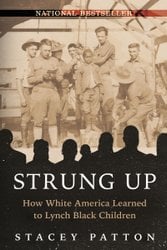
Strung Up
Stacey Patton
Stacey Patton investigates the lynching of Black children and the social practices that normalized white participation in racial violence.
Synopsis
BOOKSTHAT LIST NUMBER 8052
Do you know who Medgar Evers was?
IDENTITY & CULTURE
HISTORY
POLITICS & SOCIETY
Cover unavailableStacey Patton
Stacey Patton investigates the lynching of Black children and the social practices that normalized white participation in racial violence.
Synopsis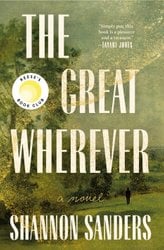 Cover unavailable
Shannon Sanders
A grieving woman inherits a share of a Tennessee farm, where family secrets and four ancestral ghosts complicate her plans.
Synopsis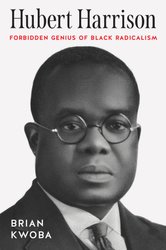 Cover unavailable
Brian Kwoba
Brian Kwoba examines Hubert Harrison’s work as a journalist, educator, and activist within Black radical politics and international struggles.
Synopsis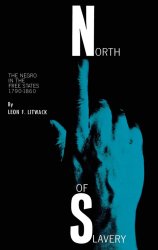 Cover unavailable
Leon F Litwack
Leon Litwack examines free African Americans’ lives in the North before the Civil War, including segregation, violence, and restrictions on opportunity.
Synopsis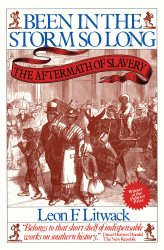 Cover unavailable
Leon F Litwack
“As a comprehensive study of the coming of freedom, Litwack's book has no rival.”
C. Vann Woodward, The New York Review of Books
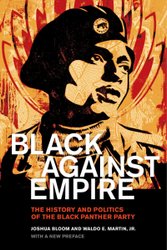 Cover unavailable
Joshua Bloom, Waldo E Martin Jr
Bloom and Martin place the Black Panthers within a larger struggle over policing, community survival, and revolutionary power.
Synopsis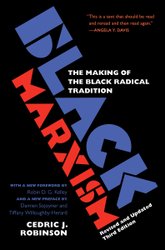 Cover unavailable
Cedric J Robinson, Robin D G Kelley
“Black Marxismis one of the key sources of the idea of 'racial capitalism' and offers an important account of the lineage of Black radical thought.”
Journal of Historical Geography
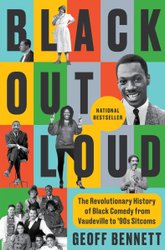 Cover unavailable
Geoff Bennett
“Black Out Loud not only offers a brilliant historical account of Black comedy and its role and place in American life.”
Eddie S. Glaude, Jr., Princeton University Distinguished Professor
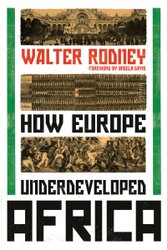 Cover unavailable
Walter Rodney, Angela Davis
Walter Rodney argues that European colonialism and exploitation shaped Africa’s economic underdevelopment and its relationship with Western wealth.
Synopsis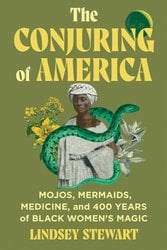 Cover unavailable
Lindsey Stewart
Lindsey Stewart traces Black women’s conjure traditions and their influence on American healing practices, spirituality, and popular culture.
Synopsis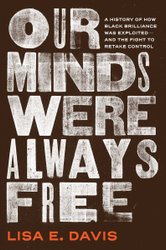 Cover unavailable
Lisa E Davis
“There’s so much to admire in this perceptive book.Lively and smart, this is a must for music lovers.”
Kirkus (starred review)Review excerpt
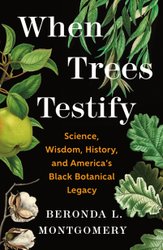 Cover unavailable
Beronda L. Montgomery
Beronda Montgomery explores how trees and botanical knowledge intersect with Black American histories of enslavement, resistance, medicine, and cultural expertise.
Synopsis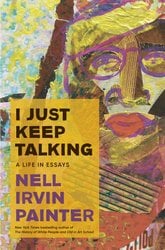 Cover unavailable
Nell Irvin Painter
“Painter puts muscle and heart into history so that her readers can easily, but thoughtfully, draw the lines between past and present.”
Robin Givhan, The Washington PostReview excerpt
 Cover unavailable
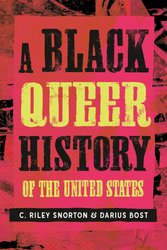
C. Riley Snorton, Darius Bost
C. Riley Snorton and Darius Bost trace Black queer, trans, and gender-nonconforming lives within American struggles for racial and sexual justice.
Synopsis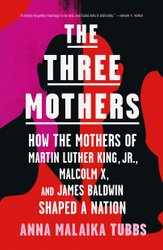 Cover unavailable
Anna Malaika Tubbs
“A refreshing, well-researched contribution to Black women’s history.”
Kirkus ReviewsReview excerpt
 Cover unavailable
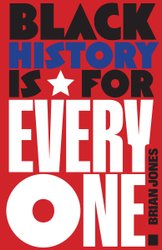
Brian Jones
Brian Jones draws on teaching and personal learning to explore how studying Black history challenges assumptions about race, nation, and possible futures.
Synopsis Cover unavailable
Joy-Ann Reid
Joy-Ann Reid recounts Medgar and Myrlie Evers’s marriage, civil rights organizing, and Myrlie’s continued activism after her husband’s assassination.
Synopsis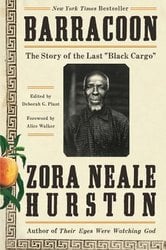 Cover unavailable
Zora Neale Hurston, Alice Walker
“An invaluable addition to American social, cultural, and political history.”
Publishers Weekly (starred review)Review excerpt
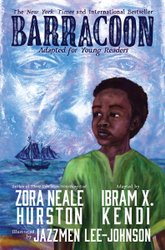 Cover unavailable
Zora Neale Hurston, Ibram X. Kendi
Adapted for young readers, Cudjo Lewis’s account describes his capture, enslavement, and life after emancipation through interviews with Zora Neale Hurston.
Synopsis Cover unavailable
Char Adams
Char Adams traces Black-owned bookstores as sites of political organizing, community life, resistance, and cultural exchange across American history.
Synopsis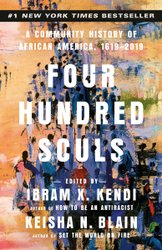 Cover unavailable
Ibram X. Kendi, Keisha N. Blain
Ibram X. Kendi and Keisha N. Blain gather multiple writers to recount African American history across the four centuries from 1619 to 2019.
Synopsis Cover unavailable
Maya Angelou, Oprah Winfrey
Maya Angelou recounts her childhood and adolescence, including family separation, racism, sexual violence, and her developing relationship with literature.
Synopsis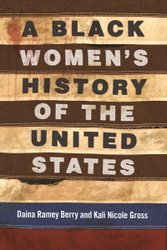 Cover unavailable
Daina Ramey Berry, Kali Nicole Gross
Daina Ramey Berry and Kali Nicole Gross trace Black women’s experiences and contributions across more than four centuries of United States history.
Synopsis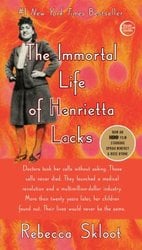 Cover unavailable
Rebecca Skloot
“Immortal Life reads like a novel.”
The Washington PostReview excerpt
 Cover unavailable
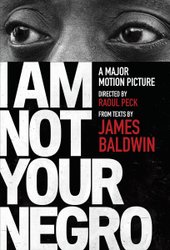
James Baldwin, Raoul Peck
“This might be the only movie about race relations that adequately explains—with sympathy—the root causes.”
The GuardianReview excerpt
 Cover unavailable
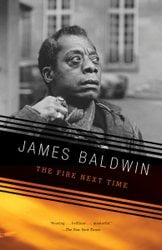
James Baldwin
James Baldwin’s two essays connect memories of growing up in Harlem with an examination of American racism and its consequences.
Synopsis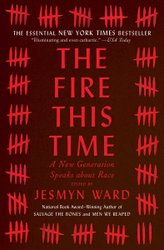 Cover unavailable
Jesmyn Ward
Jesmyn Ward gathers contemporary essays and poems that examine Black life and racism in America in response to Baldwin’s The Fire Next Time.
Synopsis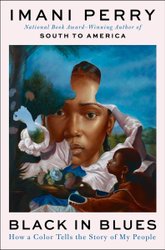 Cover unavailable
Imani Perry
Imani Perry traces the color blue through Black history, art, music, spirituality, and personal experience.
Synopsis Cover unavailable
Annette Gordon-Reed
“Gordon-Reed offers a timely history lesson.”
Daina Ramey Berry "Washington PostReview excerpt
 Cover unavailable
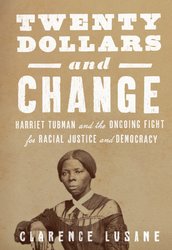
Clarence Lusane, Kali Holloway
Clarence Lusane uses the proposed Harriet Tubman twenty-dollar bill to examine racist historical narratives, public symbols, and struggles over American democracy.
Synopsis Cover unavailable
David A Varel
“Lawrence Reddick serves as a lens into the complexities of the Black freedom struggle during the twentieth century.”
Society for U.S. Intellectual History
 Cover unavailable
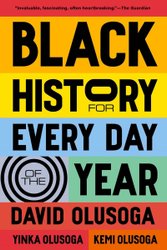
David Olusoga, Yinka Olusoga
Daily illustrated entries introduce people, places, and events in Black history, ranging from ancient African kingdoms to contemporary movements.
Synopsis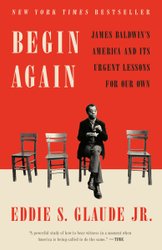 Cover unavailable
Eddie S. Glaude Jr.
Eddie Glaude revisits James Baldwin’s life and writing to examine American racism, political disillusionment, and possibilities for beginning again.
Synopsis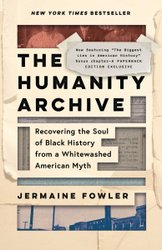 Cover unavailable
Jermaine Fowler
Jermaine Fowler surveys overlooked Black histories, connecting individual lives and historical events with questions about how American history is recorded.
Synopsis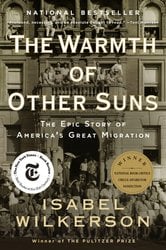 Cover unavailable
Isabel Wilkerson
Isabel Wilkerson follows three people’s lives to recount the Great Migration of Black Americans from the South to northern and western cities.
Synopsis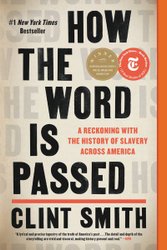 Cover unavailable
Clint Smith
“Raises questions that we must all address, without recourse to wishful thinking or the collective ignorance and willful denial that fuels white supremacy.”
Martha Anne Toll, The Washington PostReview excerpt
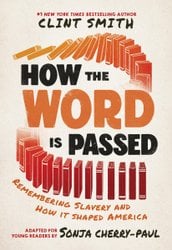 Cover unavailable
Clint Smith, Sonja Cherry-Paul
“Deeply engaging, this is a timely and important contribution to reshaping the American experience to include all participants.”
Booklist, starred reviewReview excerpt
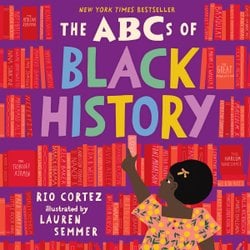 Cover unavailable
Rio Cortez, Lauren Semmer
Rhyming alphabet entries introduce Black history and culture, with additional information about the people, places, events, and ideas named in the poems.
Synopsis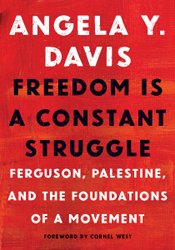 Cover unavailable
Angela Y Davis, Frank Barat
“Angela is the living proof that this arduous challenge can also be an exhilarating and beautiful one.”
Archbishop Desmond Tutu
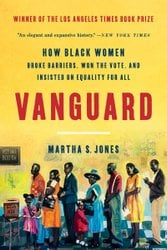 Cover unavailable
Martha S Jones
Martha S. Jones traces Black women’s struggles for voting rights and political power, connecting their activism with broader demands for equality.
Synopsis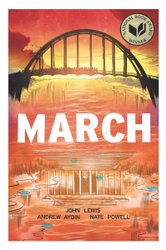 Cover unavailable
 Cover unavailable
The W E B Du Bois Center at the University of Massachusetts Amherst, Whitney Battle-Baptiste
Du Bois’s charts, graphs, and maps from the 1900 Paris Exposition document Black American life and challenge racist representations through data visualization.
Synopsis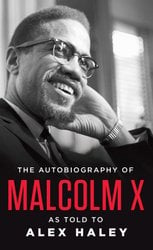 Cover unavailable
MALCOLM X
“This book will have a permanent place in the literature of the Afro-American struggle.”
I. F. Stone
 Cover unavailable
Nikole Hannah-Jones, Renée Watson
A school family-tree assignment leads a child to learn about her ancestors’ African lives, enslavement, survival, and resistance.
Synopsis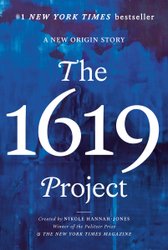 Cover unavailable
Nikole Hannah-Jones, The New York Times Magazine
“Those readers open to fresh and startling interpretations of history will find this book a comprehensive education.”
Kirkus Reviews (starred review)Review excerpt
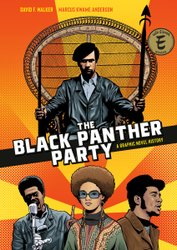 Cover unavailable
David F. Walker, Marcus Kwame Anderson
“Walker strives for a comprehensive view, dedicating his book to the party’s ‘rank and file’ involved in community work.”
The New York Times Book ReviewReview excerpt
 Cover unavailable
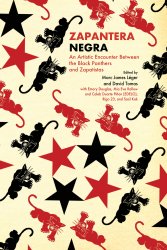
Marc James Léger, David Tomas
Interviews, artwork, and documents record encounters between Black Panther artist Emory Douglas and Indigenous Zapatista communities in Chiapas.
Synopsis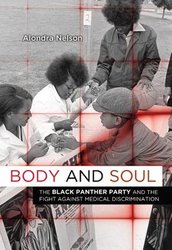 Cover unavailable
Professor Alondra Nelson
Alondra Nelson examines the Black Panther Party’s free clinics, genetic-disease campaigns, and opposition to medical discrimination as forms of health activism.
Synopsis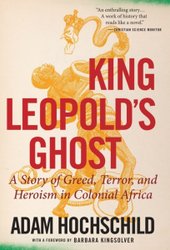 Cover unavailable
Adam Hochschild
“A vivid, novelistic narrative that makes the reader acutely aware of the magnitude of the horror perpetrated by King Leopold and his minions.”
The New York TimesReview excerpt
 Cover unavailable
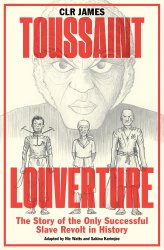
C.L.R. James, Nic Watts
This graphic adaptation of C. L. R. James’s play follows Toussaint Louverture and the Haitian Revolution’s struggle against slavery and colonial rule.
Synopsis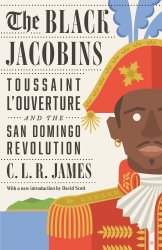 Cover unavailable
C.L.R. James, David Scott Scott
“The absorbing narrative never departs from its rigid faithfulness to method and documentation.”
Books
 Cover unavailable
Michael Harriot
Michael Harriot retells American history through Black perspectives, challenging familiar national myths and highlighting events omitted from dominant accounts.
Synopsis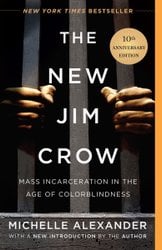 Cover unavailable
Michelle Alexander
“Carefully researched, deeply engaging, and thoroughly readable.”
Publishers WeeklyReview excerpt
 Cover unavailable
Hoke S Glover, V Efua Prince
Brief profiles of Black historical figures and cultural archetypes explore resistance, expectations, and the contradictions of American racial life.
Synopsis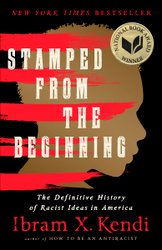 Cover unavailable
Ibram X Kendi
Ibram X. Kendi traces the creation and circulation of anti-Black racist ideas and their relationship to discriminatory policies in American history.
Synopsis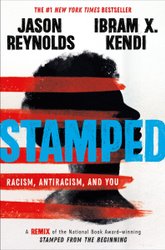 Cover unavailable
Jason Reynolds, Ibram X Kendi
Jason Reynolds adapts Kendi’s research for young readers, examining how racist ideas developed, spread, and can be challenged.
Synopsis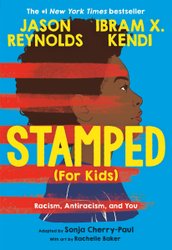 Cover unavailable
Jason Reynolds, Ibram X Kendi
A children’s adaptation introduces the history of racist and antiracist ideas and helps readers identify their effects in everyday life.
Synopsis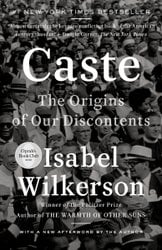 Cover unavailable
Isabel Wilkerson
“It’s a book that changes the weather inside a reader.”
Dwight Garner,The New York TimesReview excerpt
 Cover unavailable
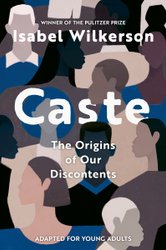
Isabel Wilkerson
This young-adult adaptation examines social hierarchies in America and other societies, showing how inherited rankings organize power and dehumanize people.
Synopsis